By Joseph R. Jaramillo, Vice President, Digital Services, Abba Technologies
Connect with Joseph
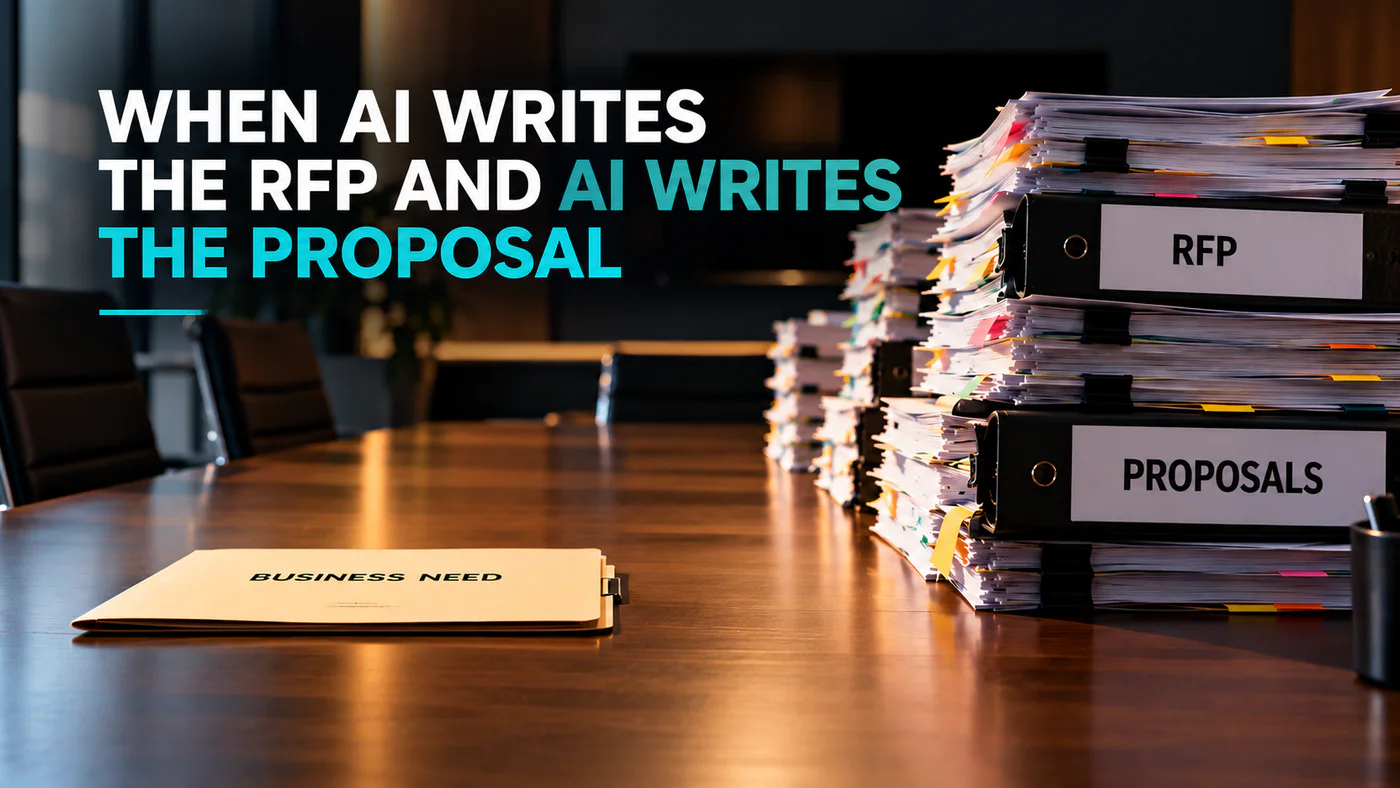
AI is changing both sides of the procurement process.
Organizations are using it to help write RFPs, define requirements, and structure scopes of work. Vendors are using it to help write proposals, develop approaches, and respond faster.
There is nothing inherently wrong with that. We use AI ourselves to move faster, research more efficiently, and improve the quality of our work.
But I am starting to see a different problem emerge.
More Activity, Not Always More Clarity
Over the last year, I have seen technology solicitations attract a significant number of responses, major requirements get changed or removed through Q&A, and some RFPs get cancelled altogether.
In one case, I spoke with an organization that had cancelled a solicitation after receiving an overwhelming number of responses, many at price points well beyond what they expected. On paper, the opportunity looked like a significant geospatial digital transformation effort, and the market responded accordingly.
Once we talked through the actual need, it was much simpler. It was primarily a data problem.
The issue was not just that the scope had been misunderstood. The way the RFP was written attracted a much larger field of vendors and drove more complex, more expensive solutions than the organization was looking for. The procurement process had created a level of scale and complexity around the opportunity that did not match the underlying business need.
That is not necessarily an AI problem, but AI can amplify it.
AI Can Make an Immature Requirement Look Mature
AI is very good at organizing information and filling in gaps.
Give it a business problem and it can quickly produce technical requirements, project phases, governance language, deliverables, qualifications, and evaluation criteria. The resulting document can look incredibly complete.
But a complete document does not necessarily mean the underlying problem has been clearly defined.
Every major requirement still needs a reason to exist. Why is a particular technology required? Why is a certification necessary? Why is a specific architecture being prescribed?
AI can help develop the RFP, but somebody still has to own the thinking behind it.
The Same Thing Is Happening on the Proposal Side
Vendors now have access to the same tools.
AI can help produce polished executive summaries, technical approaches, schedules, staffing plans, and risk strategies. As that becomes normal, the quality of the writing itself becomes less useful as a way to determine who can actually perform the work.
A proposal can sound excellent. The more important questions are still about the people and experience behind it.
Who is actually going to do the work? What have they delivered before? Can they explain the architecture and the assumptions behind their approach? Can they point to something they have put into production and explain what changed for the client?
Those questions become more important as the documents themselves become easier to produce.
Procurement Has to Keep Evolving
I do not think the answer is to stop using AI. The value is real on both sides of the process.
But procurement may need to place more emphasis on the things AI cannot manufacture as easily: direct conversations with the proposed delivery team, relevant past performance, technical discussions, references, and demonstrated experience.
Buyers may also need to spend more time validating the problem before turning it into a long list of requirements.
AI can make a simple problem sound like a transformation program. It can also make an average proposal sound exceptional.
That means the thinking behind both documents matters more than ever.
Has AI made us better at defining problems, or just better at describing them?